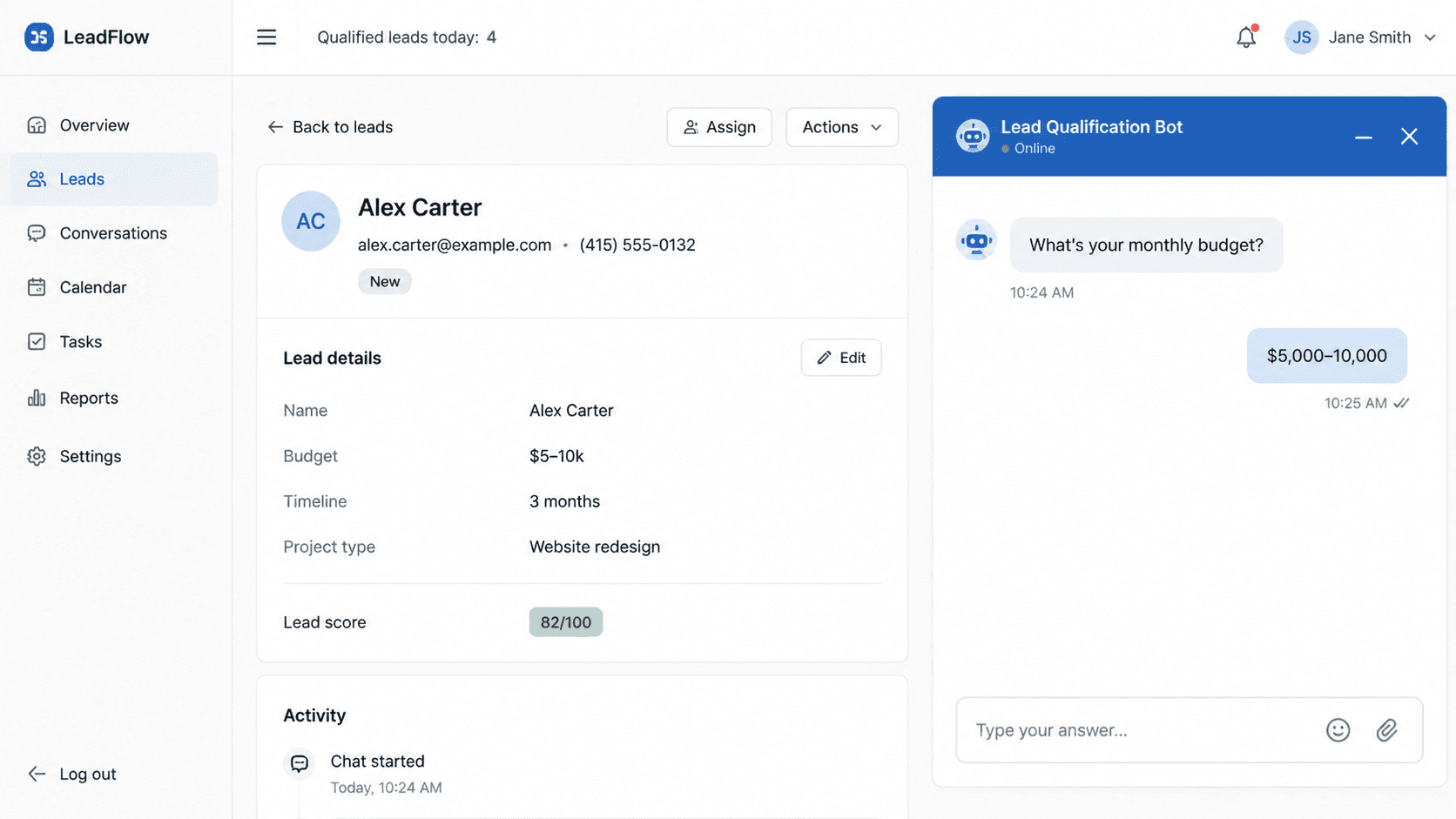
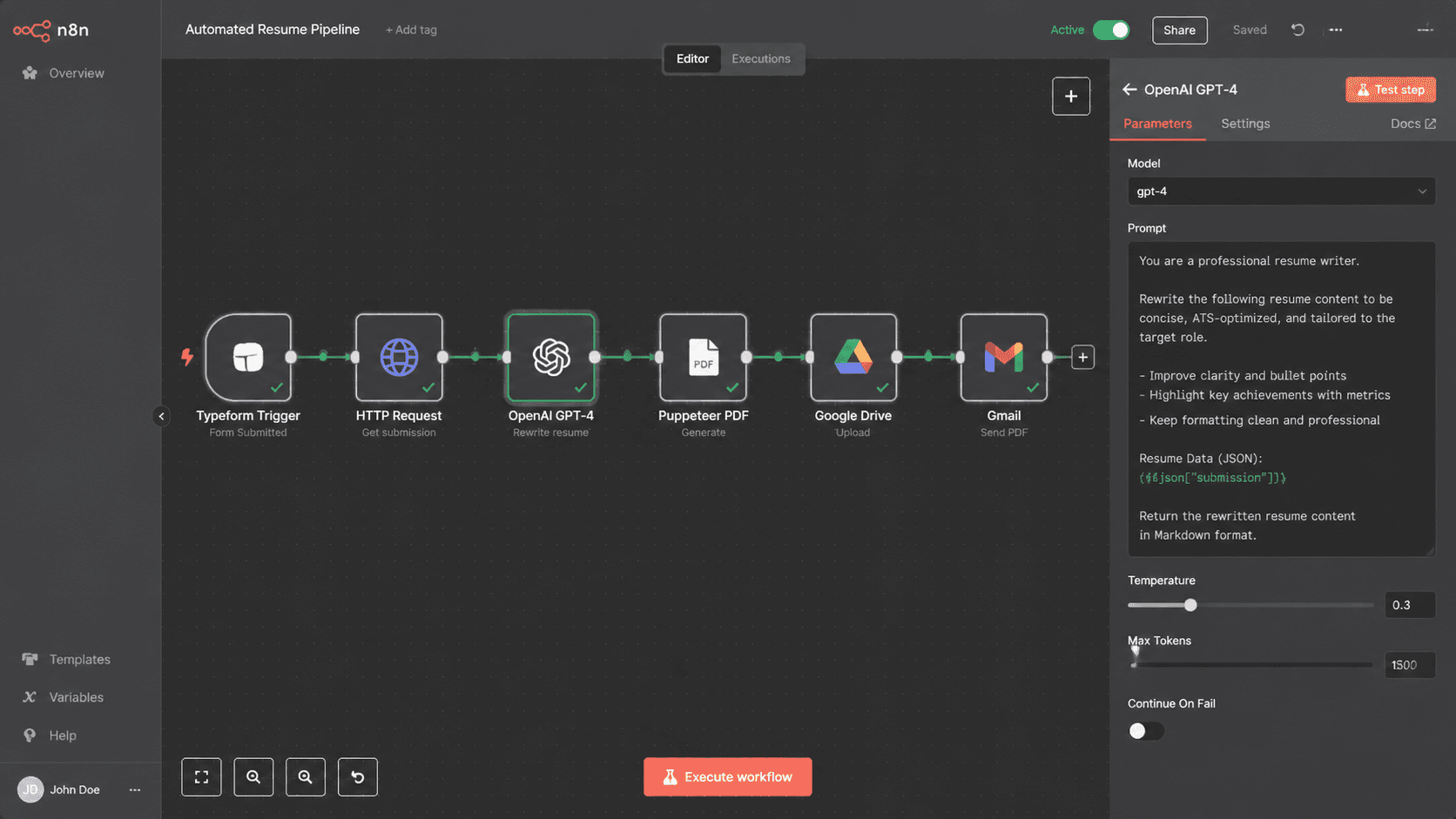
Before: inbound leads landed in a contact form and waited hours for a manual response. After: an AI agent qualifies every visitor in real time — asks about budget and timeline, creates a CRM record, sends a personalised follow-up, and books a call, all without a human in the loop.
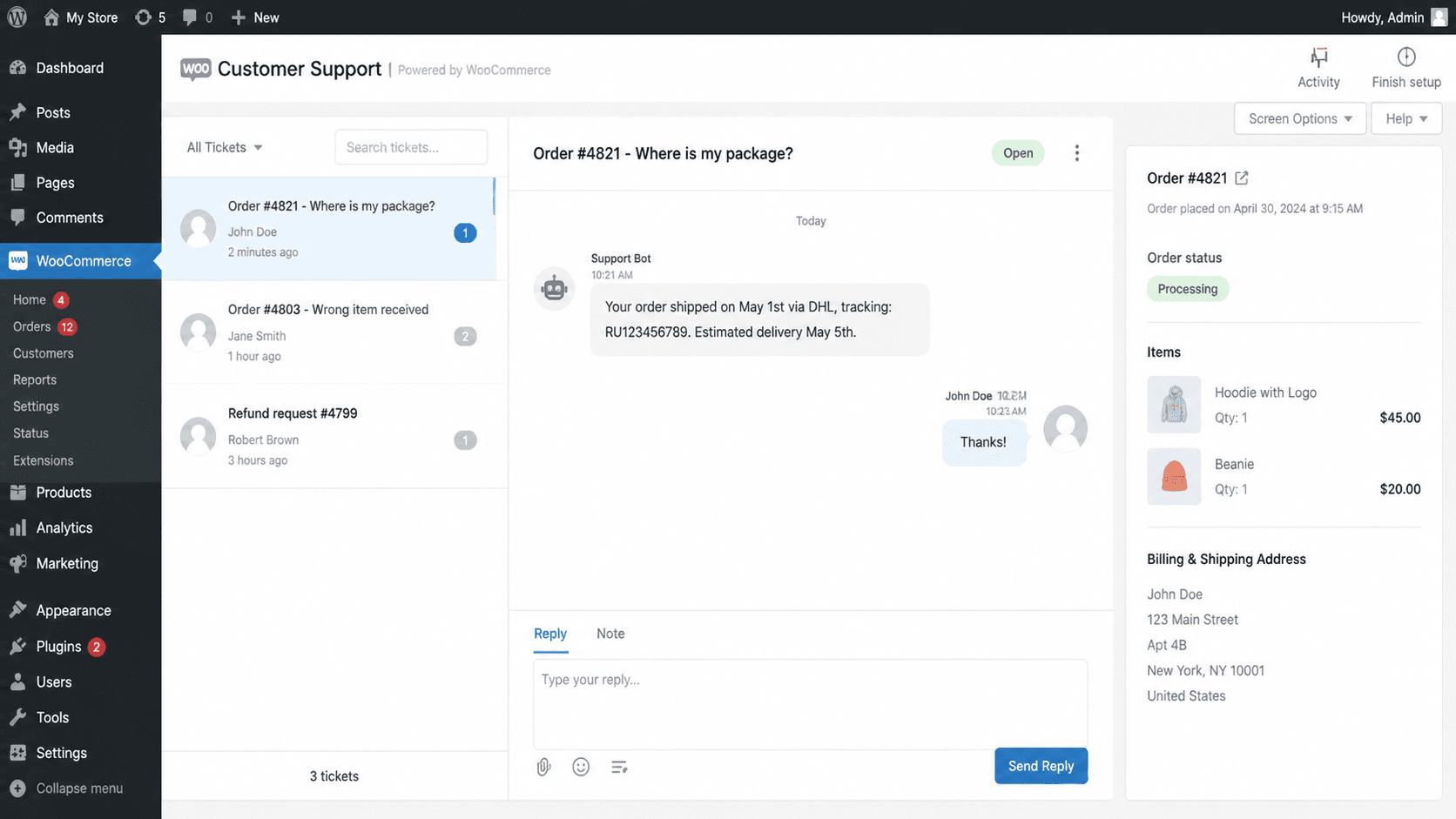
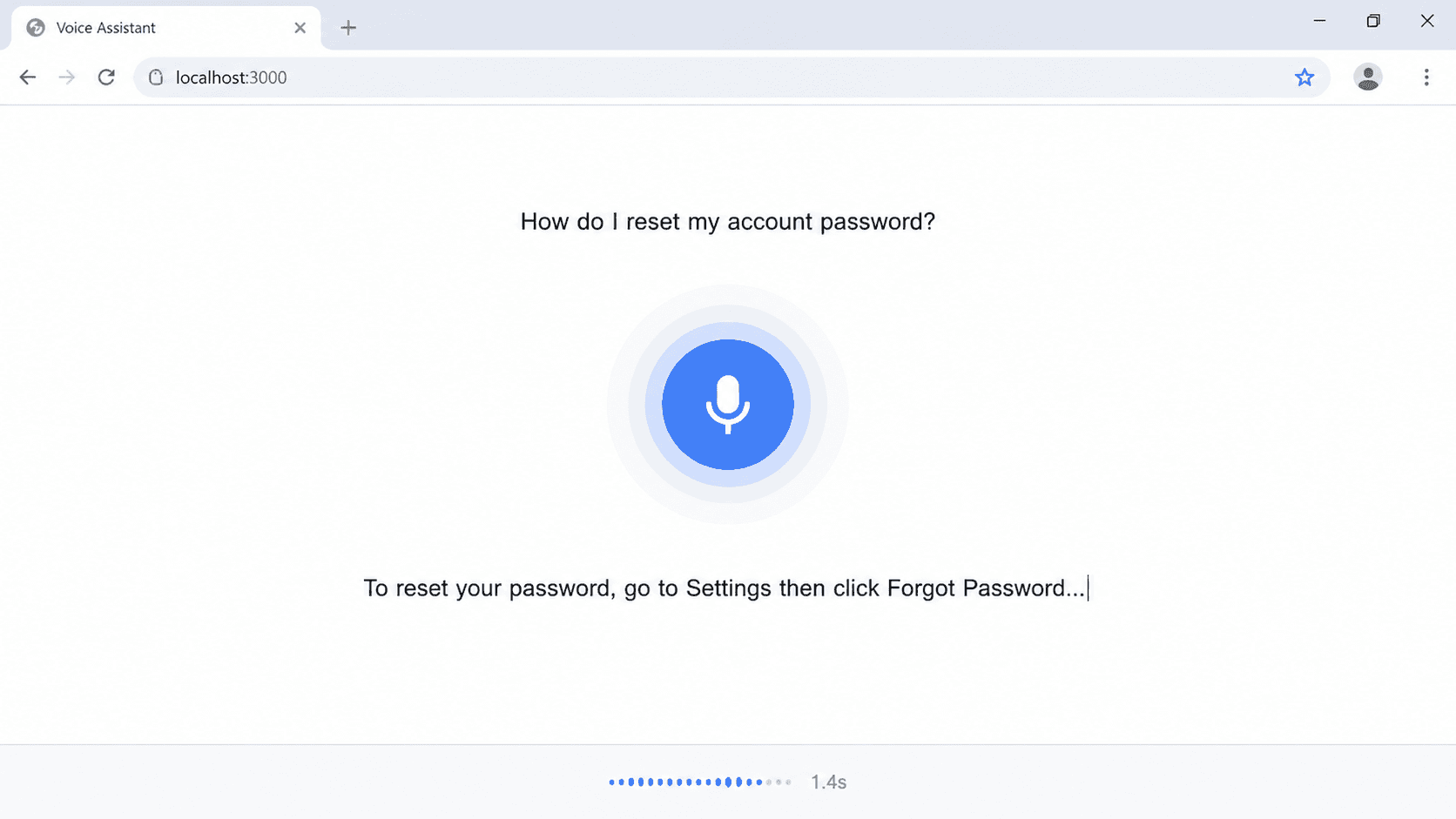
Before: support tickets for order status, returns, and product questions piled up and required manual lookup in WooCommerce. After: an AI agent answers instantly — connected live to orders, product catalog, and FAQ — and escalates only the cases that genuinely need a human.
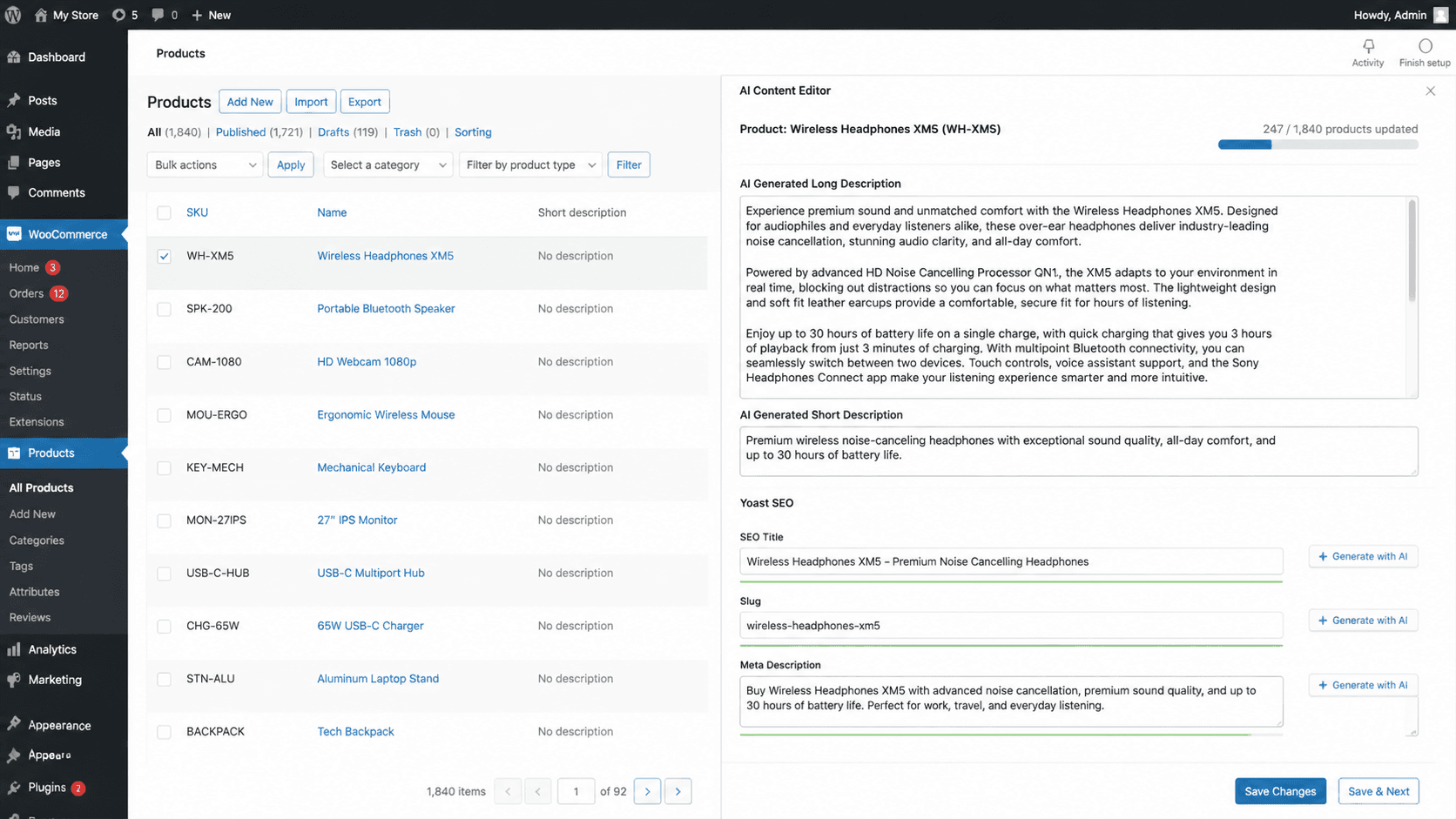
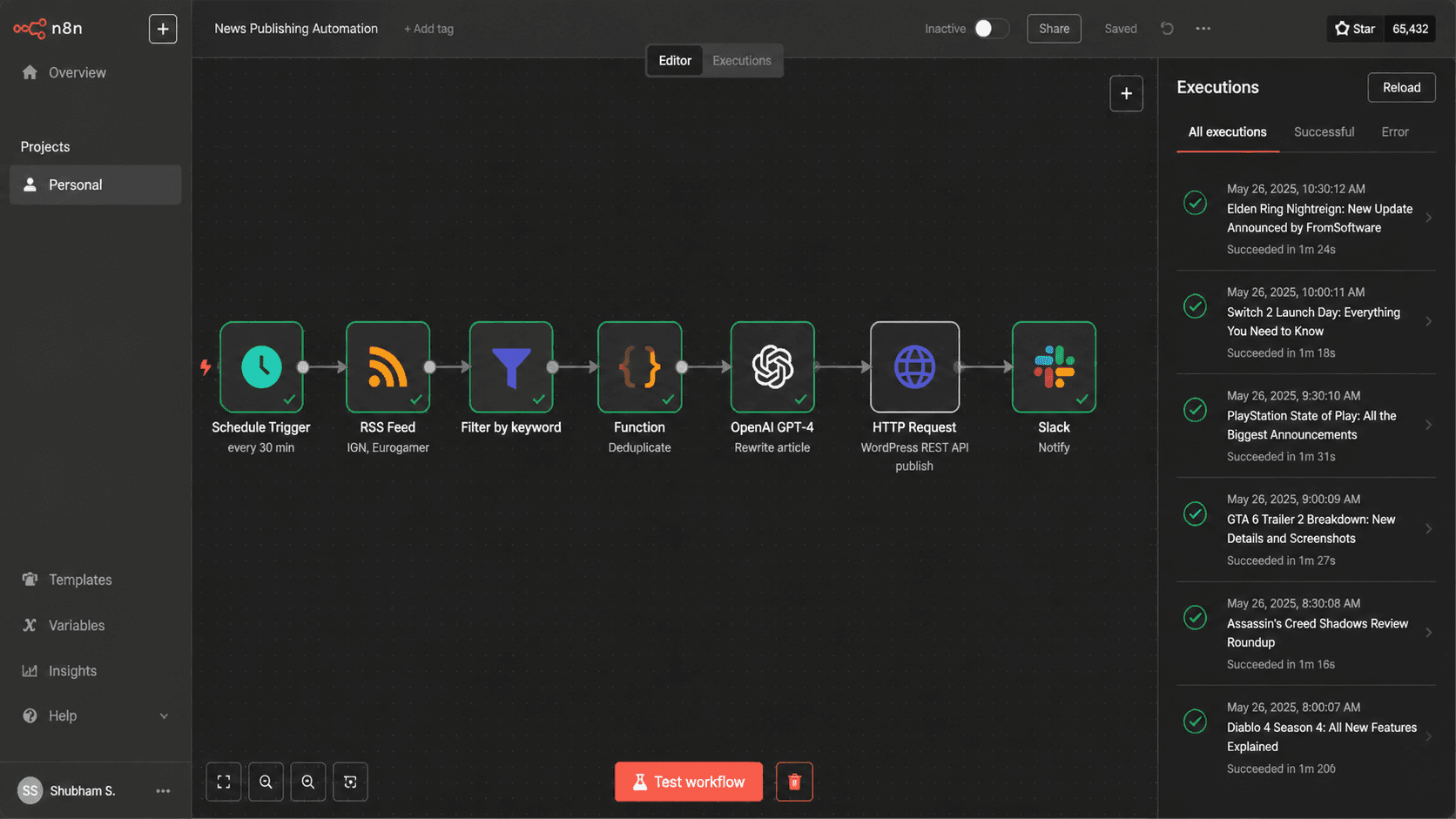
Before: product descriptions were thin, inconsistent, and written manually — one by one. After: an AI agent generates and improves product descriptions, category copy, SEO metadata, and internal linking suggestions at scale, using live store data as the source.
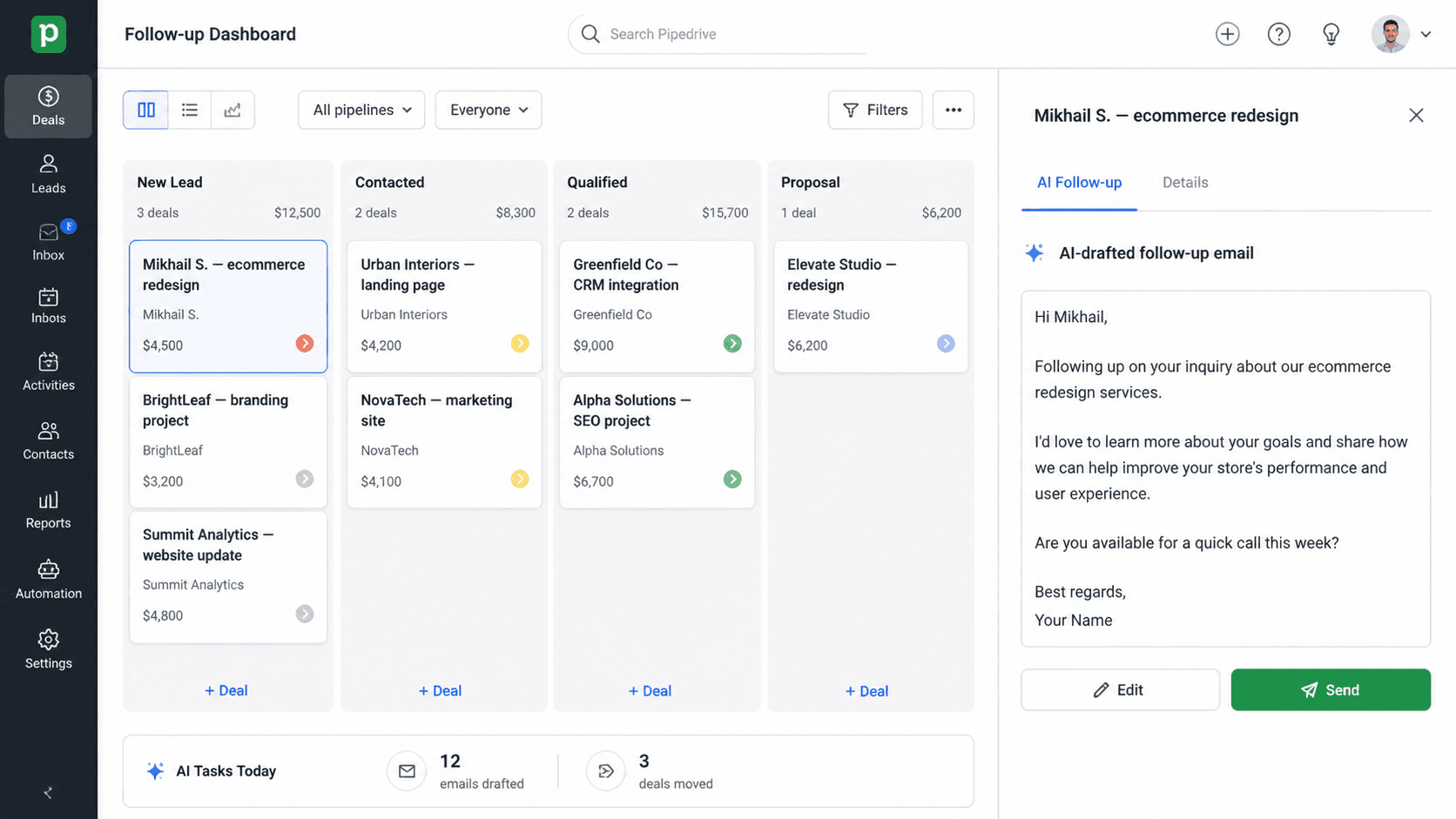
Before: new leads sat in the CRM until a sales rep found time to follow up — often days later. After: an AI agent monitors incoming leads, drafts personalised follow-up emails, updates deal stages, creates tasks, and alerts the team when a lead shows buying signals.
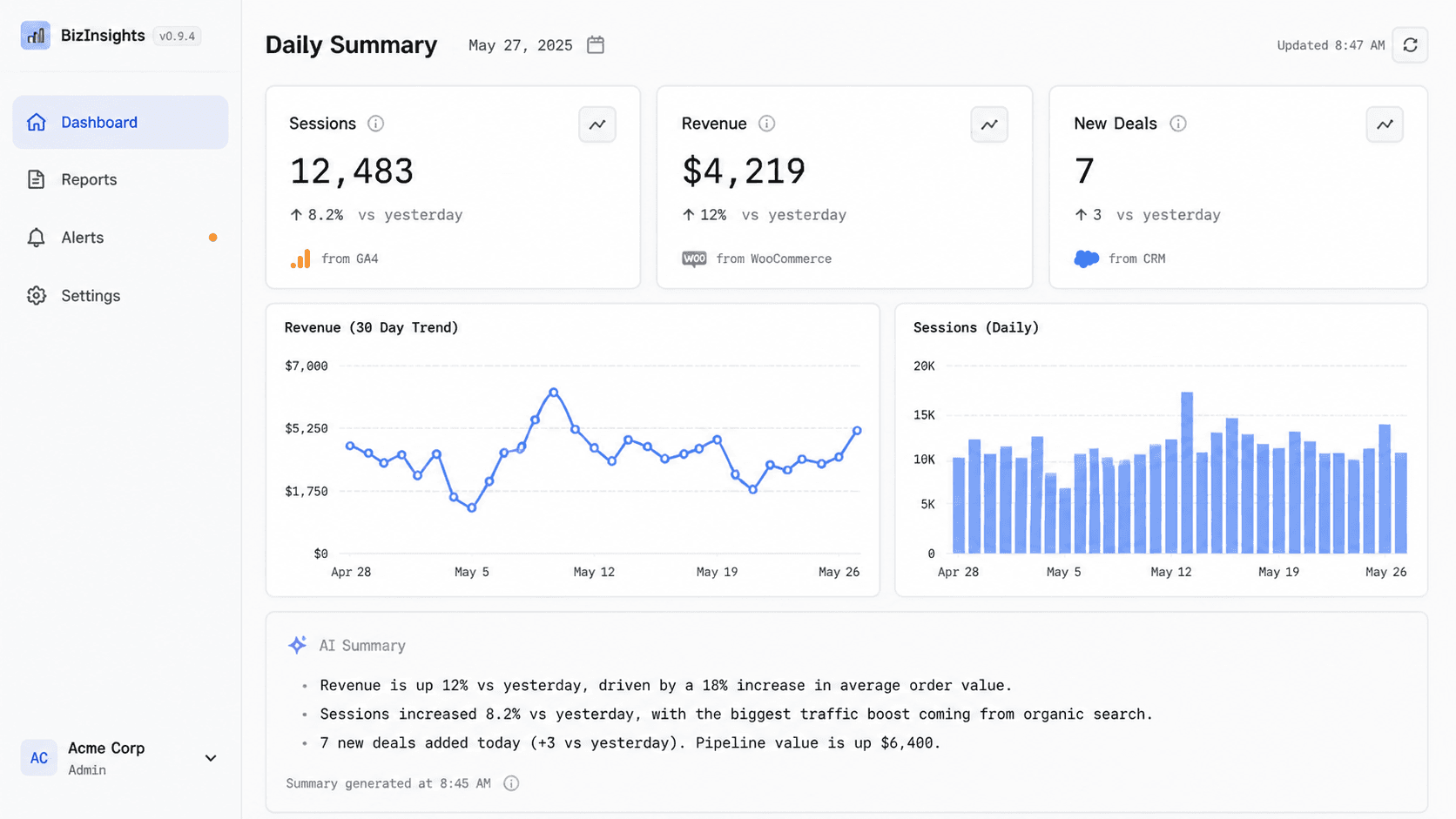
Before: daily business reviews required manually pulling numbers from GA4, WooCommerce, the CRM, and spreadsheets — a 30-minute task that rarely happened. After: an AI agent delivers a single daily summary with sales figures, lead counts, anomalies, abandoned carts, and recommended actions.
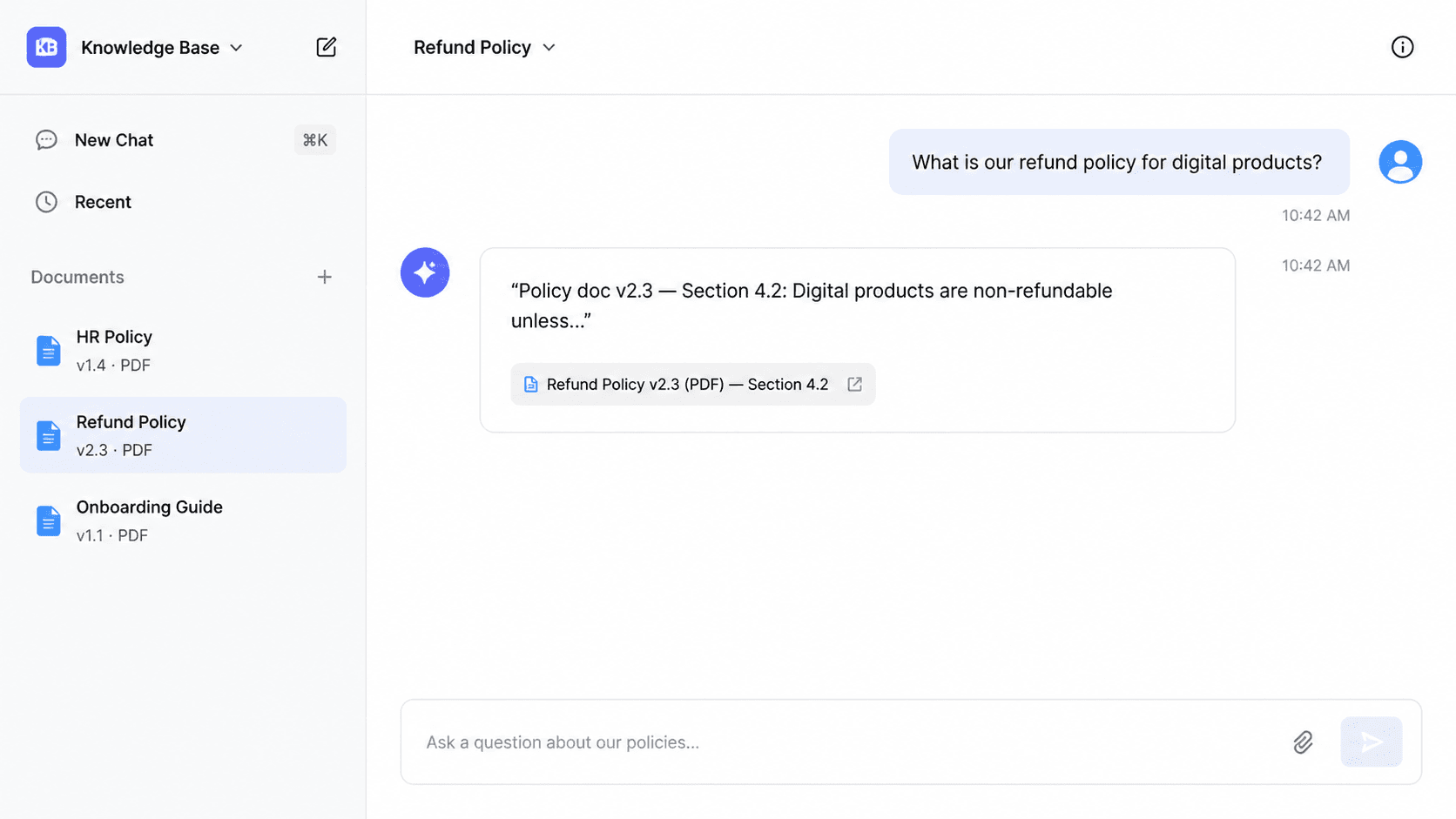
Before: team members spent hours searching through Google Drive, Notion, and email threads for policies, procedures, and past decisions. After: an internal AI assistant answers questions instantly by searching company docs, summarising policies, and drafting support-ready responses.